on connections

One of my good friends is an entrepreneurial, go-getter kind of marketer guy. I love the man dearly but there are a few areas where our ideologies are very different. He’s a dynamic, risk-taking kinda guy, I like to play it safe; he likes organising, I like following, etc.

So once when he explained the importance of knowing the right people, of connections, you can guess what I thought. It was something along the lines of “Pah! A man shouldn’t have to rely on connections, he should work for things!” Continue reading “on connections”

on neglected commanders of the roman world: mithridates VI

Sources Appian, Mithridatic Wars (46-50); Plutarch, Life of Sulla; Cassius Dio (30-37)

His time Mithridates’ world was a time of war, when the Roman Republic was rapidly expanding its power through military conquest and economic strong-arming. The old Greek-speaking kingdoms established by Alexander the Great’s generals, which till now had dominated the known world, were on the wane, fighting a losing battle against Rome. Mithridates ruled the kingdom of Pontus on the southern shore of the Black Sea, yet another Greek-speaking kingdom among many in the region. Though relatively small it was rich, and a perfect target of Rome’s depredations. Continue reading “on neglected commanders of the roman world: mithridates VI”

on japan’s treatment of its christians

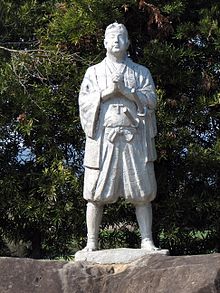
Meet Amakusa Shiro, the charismatic teenaged leader of the ill-fated Shimabara rebellion in Japan, which began in 1637 and was put down a year later.

What started off as general discontent among the commoners of Shimabara against their heavy-handed masters culminated in the lynching of a local tax official. As the revolt gathered steam the rebels attempted to storm the local lord’s castle, but were repelled. As government troops arrived on the scene the rebels, under Shiro, captured the previously abandoned Hara castle and prepared to make their last stand there. Continue reading “on japan’s treatment of its christians”

on friendship and brotherhood

Brotherhood, camaraderie and friendship are important values to me. So today during a business meeting I thought about the different attitudes to friendship and brotherhood I’ve encountered:

Jesus takes a very counter-cultural attitude to friendship – it can be a hindrance to following Jesus (Luke 14:26). Brotherhood is not determined by blood, or shared experience, whether hardship or pleasure; rather is it determined by a shared purpose in doing the will of God (Mat 12:48-50). There is however also something sacred in brotherhood, to love and care for one’s brothers is to do the same for Jesus (Mat 25:40). Jesus defines love as laying down one’s life for friends, while at the same time calling his friends to do the same for each other, and in so doing, become closer to Jesus (John 15:13-15). And finally Jesus insists that his followers should not love only their friends, but should show sacrificial love to enemies as well (Mat 5:43-48). Continue reading “on friendship and brotherhood”

on re-writing the past

‘The winners write the history books’ may be a cliché but it is pretty true, come to think of it.

I’d been reading In the Shadow of the Sword by Tom Holland not too long ago, and his look at the historicity of the Koran was pretty new to me. In Islam, the Koran is supplemented to a large extent by the hadiths, which are sayings attributed to Muhammad and for that reason carry a lot of authority. Hadiths can be taken alone or can be used to interpret the Koran.

Holland argues however that for all the vicarious authority the hadiths carry, very few of them can concretely be traced to Muhammad, which to my mind raises questions about their historicity (and validity) to begin with.

Which got me thinking – most cultures in this world will fudge with history if they think they can get away with it, and/or if it suits them. Continue reading “on re-writing the past”

Blog at WordPress.com.

Up ↑